
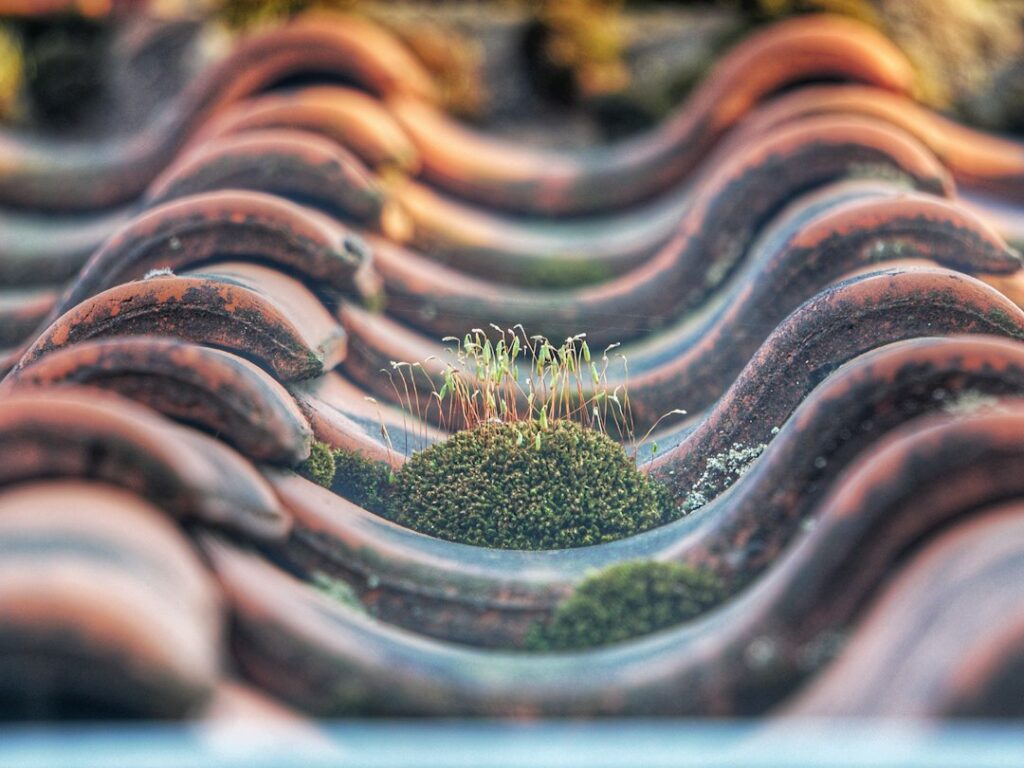
Roof moss and algae are common concerns for homes in Amsterdam, NY, especially where shaded roof surfaces stay damp after rain, snow, and periods of high humidity. Neither growth should be ignored, but the correct response depends on whether the issue is mostly surface staining, a thin layer of moss, or vegetation that has begun lifting shingles.
What is growing on the roof?
Algae usually appear as dark green, gray, or black streaks and patches. On asphalt shingles, these marks are often caused by algae living near the surface. Algae can make a roof look weathered, but light staining does not always mean the shingles are failing.
Moss is thicker and more three-dimensional. It may look like a green carpet, clumps, or small cushions growing along shingle edges, in roof valleys, or beneath overhanging branches. Moss holds moisture against roofing materials and may work its way under shingle edges as it expands.
Lichen is another possibility. It forms crusty, pale green, gray, or yellow patches and can attach firmly to roofing surfaces. Lichen is often more difficult to remove without causing damage.
Correct identification matters because aggressive cleaning methods may be unnecessary for algae and harmful to shingles affected by moss or lichen.
Why do moss and algae grow on roofs?
Moss and algae need moisture, shade, and a surface where they can remain undisturbed. Roofs with limited sunlight are more likely to develop growth, particularly beneath mature trees or on slopes facing away from direct sun.
Several conditions can contribute:
- Leaves, pine needles, and other organic debris trap moisture.
- Clogged or slow-draining gutters allow water to remain near roof edges.
- Overhanging branches reduce sunlight and shed debris.
- Poor attic ventilation can contribute to prolonged roof dampness.
- Rough, aging, or weathered shingles provide places for growth to attach.
- Snow and repeated freeze-thaw conditions can keep shaded areas damp for extended periods.
In the local climate, a roof may stay wet well after a storm, especially during spring and fall. Snow that melts slowly in shaded areas can also create repeated damp conditions along lower roof sections.
Is moss or algae a sign that the roof must be replaced?
No. Algae stains alone are usually a cosmetic concern, while moss may become a maintenance and damage concern if it continues to spread. A roof should not be replaced solely because dark streaks or limited moss are present.
The more useful questions are:
- Are shingles cracked, brittle, curled, or missing?
- Has moss lifted the edges of shingles?
- Is granule loss visible in gutters or around downspouts?
- Are there damp spots, leaks, or water stains in the attic or upper floors?
- Does the roof have widespread deterioration beyond the affected area?
A relatively sound roof may only need careful cleaning and moisture-control measures. If the roofing material is already near the end of its expected service life, growth may simply make existing wear easier to see.
How should algae stains be handled?
Light algae staining can often be addressed with a low-pressure cleaning approach designed for roofing materials. The goal is to loosen and remove surface growth without stripping away protective granules.
High-pressure washing is generally a poor choice for asphalt shingles. Pressure can remove granules, force water beneath shingle edges, damage flashing, and shorten the useful life of the roof. Scrubbing with stiff brushes can create similar problems.
Cleaning products should be compatible with the specific roofing material. A solution that is safe for one surface may discolor metal, damage nearby plants, or weaken other building materials. Overspray can also affect siding, painted surfaces, gutters, and landscaping.
For minor staining, time and weather may gradually reduce the appearance after treatment. The goal should be controlled removal, not making the roof look new at any cost.
What is the safest way to remove moss?
Moss should be loosened carefully rather than ripped, scraped, or power-washed away. Pulling upward can lift shingle edges and remove protective granules. Walking on a moss-covered roof also creates a slipping hazard and may damage weakened shingles.
A careful process generally includes:
- Removing nearby organic debris from gutters and roof edges.
- Applying an appropriate moss treatment according to its label instructions.
- Allowing the treatment time to work instead of immediately scrubbing.
- Letting dead moss weather away gradually when possible.
- Avoiding tools that gouge, scrape, or pry against the shingles.
- Protecting plants and soil from runoff during any treatment.
Moss may not disappear immediately after treatment. Dead material can remain visible for weeks, and removing every trace in one session may create more damage than leaving some loosened growth to wash away naturally.
Can household cleaners or bleach be used?
Some cleaning solutions can remove algae or kill moss, but household products are not automatically suitable for roofing. Concentrated chemicals may discolor shingles, corrode metal components, harm plants, or contaminate soil and drainage areas.

Never mix cleaning chemicals. Combining bleach with other products can create dangerous fumes. Product labels should be followed carefully, including dilution, runoff control, protective equipment, and restrictions for use near vegetation or waterways.
A small test area can reveal whether a treatment changes the color or texture of the roofing material. Testing does not eliminate the need for caution, but it can prevent a large, visible mistake.
How can future growth be reduced?
Removing moss without changing the conditions that support it often leads to recurrence. Prevention focuses on sunlight, drainage, and debris control.
Trim branches that rest on or heavily shade the roof, while avoiding unnecessary cutting that could destabilize trees or create new hazards. Keep gutters and downspouts clear so water can move away from the roof and foundation. Remove leaves and small branches before they form thick, wet mats.
Roof-cleaning strips or similar roof-compatible systems may help reduce algae growth when installed correctly. These systems work by releasing a small amount of material down the roof during rainfall. They should not be installed by driving fasteners through areas that could create leaks, and they must be compatible with the roof covering and metal components.
Improving attic ventilation may also help reduce moisture in the roof assembly, but ventilation changes should be planned carefully. Adding vents without providing a balanced intake and exhaust path may not solve the underlying problem.
When is roof work unsafe to do personally?
Roof cleaning becomes hazardous when the surface is steep, wet, icy, fragile, or difficult to access safely. Moss and algae make shingles slippery, and fall risks increase during spring thaw, after rain, and when frost is present.
Extra caution is warranted when:
- The roof is more than one story above ground.
- A ladder would need to rest on unstable or uneven surfaces.
- Shingles are brittle, loose, or visibly damaged.
- Electrical lines, skylights, chimneys, or steep valleys are nearby.
- Chemical runoff could reach gardens, ponds, or sensitive landscaping.
- There is evidence of interior leaking or structural damage.
In these conditions, avoiding roof access is safer than attempting a cleanup that could cause injury or worsen the damage.
Does roof moss damage the inside of a house?
Moss does not automatically mean a roof is leaking, but it can contribute to problems. As moss thickens, it retains moisture and may lift shingle edges. That can allow wind-driven rain or melting snow to reach under the roofing surface.
Check the attic and upper ceilings for:
- Dark water marks
- Damp insulation
- Musty odors
- Soft or stained wood
- Peeling paint near upper walls or ceilings
Leaks may not appear directly below the affected roof area because water can travel along rafters, sheathing, or insulation before becoming visible indoors. A dry ceiling does not always prove that the roof is unaffected.
Regular observation, gentle maintenance, and attention to drainage can keep limited moss and algae from becoming a larger roofing problem. The main objective is to control moisture and protect the shingles rather than remove every mark through aggressive cleaning.
