
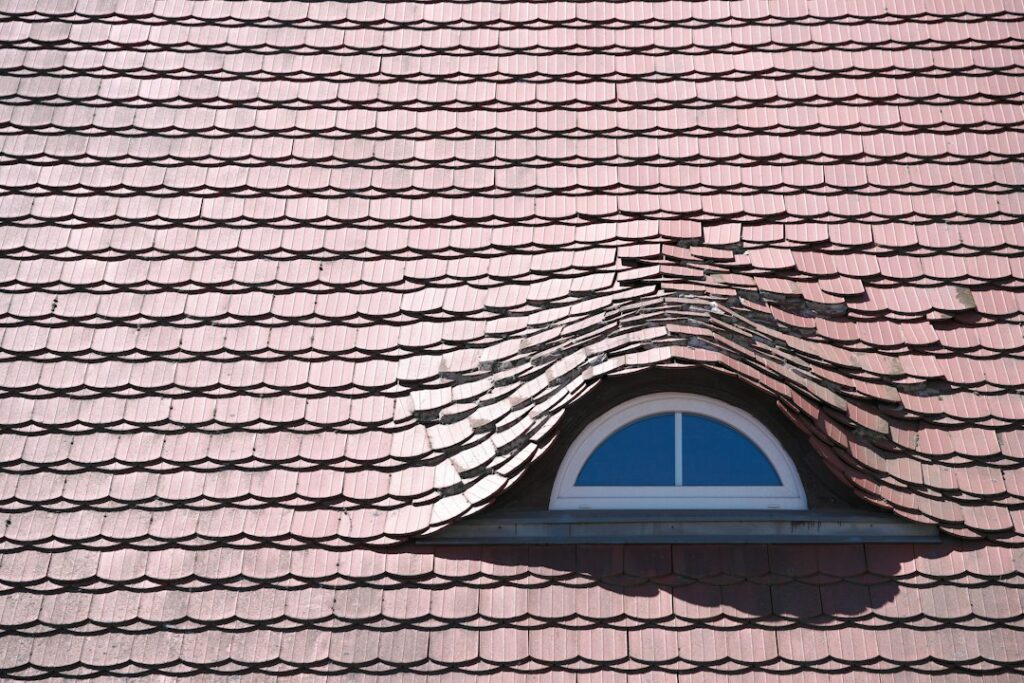
Humidity affects roofing materials mainly by increasing moisture exposure, slowing drying, encouraging biological growth, and creating condensation inside the roof system. In Amsterdam, NY, seasonal changes make this especially relevant: roofs may experience damp summers, wet transitions between seasons, and cold winter conditions that turn indoor moisture into attic condensation.
What does humidity do to a roof?
High humidity does not usually damage a roof in a single day. The greater concern is repeated moisture exposure without enough time for the roof assembly to dry.
Roofing materials are designed to manage rain, snow, sunlight, and temperature changes. They are less able to tolerate trapped moisture. Water vapor can move through the building, collect beneath the roof covering, or condense on cold surfaces such as roof sheathing, fasteners, and framing.
Over time, persistent dampness may contribute to:
- Mold or mildew growth
- Wood rot and weakened roof decking
- Corrosion of metal components
- Deterioration of insulation
- Loosened roofing fasteners
- Staining on attic surfaces or ceilings
- Premature aging of asphalt-based materials
Humidity becomes more damaging when ventilation is limited, roof leaks go unnoticed, or warm indoor air escapes into a cold attic.
How does humidity affect asphalt shingles?
Asphalt shingles can withstand normal outdoor moisture, but high humidity can worsen existing weaknesses. Shingles may absorb small amounts of moisture through their mats and edges, particularly when they are aging or damaged.
Repeated wetting and drying can cause materials to expand and contract. This may contribute to curling, blistering, granule loss, or weakened adhesive bonds. Humid conditions can also keep roof surfaces damp longer after rain, allowing algae and moss to grow where shade and debris are present.
Moisture-related shingle problems are often confused with ordinary aging. A roof that appears intact from the ground may still have damp decking or deteriorating underlayment beneath the shingles. A roof inspection is more informative when it includes attic areas and visible roof penetrations, not just the surface covering.
Can humidity damage the roof deck?
Yes. The roof deck, often made from plywood or oriented strand board, is particularly vulnerable to prolonged moisture.
Roof decking can absorb water vapor and liquid water. If the material repeatedly becomes damp and cannot dry, it may swell, soften, delaminate, or lose some of its structural strength. Fasteners may also become less secure when the surrounding wood deteriorates.
There are two common sources:
1. Exterior moisture: damaged shingles, failed flashing, clogged drainage paths, ice-related leaks, or wind-driven rain.
2. Interior moisture: warm air from the living space entering the attic and condensing on cold roof surfaces.
A small roof leak may not produce a visible ceiling stain immediately. Water can travel along the underside of the roof deck before appearing elsewhere.
Why is winter attic condensation a concern?
Winter condensation is one of the most overlooked humidity-related roofing problems. Heated indoor air naturally contains moisture from cooking, bathing, laundry, plants, and normal breathing. If that warm air reaches a cold attic, the moisture may condense on the underside of the roof deck.
This can look like frost, dampness, dark staining, or droplets on nails and framing. During a thaw, accumulated frost may melt and resemble a roof leak.
In cold weather, warning signs include:
- Frost or water droplets on roof sheathing
- Damp insulation
- Musty attic odors
- Darkened wood around nail points
- Peeling paint near upper ceilings
- Repeated ice buildup along roof edges
The problem may continue even when the exterior roof covering is in good condition. Air leakage from the house, inadequate insulation, blocked soffit openings, or poorly routed bathroom and kitchen exhaust can all raise attic moisture.
Does roof ventilation control humidity?
Proper ventilation can help remove moisture and reduce heat buildup, but ventilation is not a cure for every moisture problem. It works best when paired with a reasonably airtight ceiling, correctly installed insulation, and exhaust fans that discharge outdoors.
A roof system may use intake ventilation near the eaves and exhaust ventilation near the ridge or upper roof area. The goal is to support a steady flow of air through the attic space without allowing outside weather to enter.
Ventilation can be ineffective when:
- Soffit vents are blocked by insulation
- Exhaust vents are covered or poorly installed
- Attic air leaks are left unsealed
- Bathroom fans discharge into the attic
- Insulation is compressed or uneven
- The roof design does not provide a clear ventilation path

Adding vents without addressing air leakage can leave the main source of moisture untouched. In some homes, excessive ventilation can also create unwanted drafts or allow snow and wind-driven rain to enter.
How do different roofing materials respond?
Roofing materials react differently to moisture, but no material is completely unaffected by poor drying conditions.
Asphalt shingles: May experience faster aging, algae growth, granule loss, and adhesive deterioration when constantly damp.
Wood shakes and shingles: Can absorb moisture, swell, split, or decay if they remain wet. They require good airflow and careful separation from accumulated leaves and debris.
Metal roofing: Does not rot, but condensation beneath the panels can corrode fasteners, underlayment, or concealed metal surfaces. Large temperature swings can make condensation more likely.
Rubber and synthetic membranes: Often resist liquid water effectively, but trapped moisture below the membrane can damage the roof deck and reduce adhesion.
Flashing and fasteners: Metal components may corrode when exposed to persistent moisture, especially where protective coatings have been damaged.
The performance of a roof depends on the complete assembly, including the covering, underlayment, flashing, roof deck, insulation, and ventilation.
What can local residents do to reduce humidity-related roof problems?
Moisture control begins inside and outside the home.
Inside the house, keep indoor relative humidity at a moderate level. The exact target varies with temperature and building conditions, but persistent readings above 60 percent increase the likelihood of condensation and mold. A basic hygrometer can help identify unusually damp rooms.
Useful steps include:
- Run bathroom exhaust fans during bathing and for a short period afterward.
- Vent clothes dryers outdoors.
- Use range ventilation when cooking.
- Keep attic access panels properly sealed.
- Avoid blocking soffit vents with stored items or insulation.
- Check that exhaust ducts terminate outdoors rather than in the attic.
- Use a dehumidifier in persistently damp areas when appropriate.
Outside, keep gutters and drainage paths clear, remove heavy debris from roof valleys, and watch for damaged flashing around chimneys, vents, skylights, and wall intersections. Trees that shade a roof can slow drying, although trimming decisions should account for the building and surrounding property.
When does humidity suggest a larger roofing problem?
Humidity alone does not prove that a roof is failing. The combination of high moisture and visible symptoms is more significant.
Further evaluation is warranted when an attic has widespread staining, soft decking, wet insulation, recurring condensation, mold-like growth, or a strong musty odor. Safety also matters: walking on steep, icy, wet, or deteriorated roofing surfaces can cause falls and additional damage.
For older homes, moisture problems may involve several interacting factors rather than one defective material. A roof can be watertight while the attic remains damp because of air leakage. Conversely, good ventilation cannot compensate for a failed flashing detail or an active leak.
Understanding that distinction helps residents address the source of moisture instead of treating only the visible stain or surface growth.
