
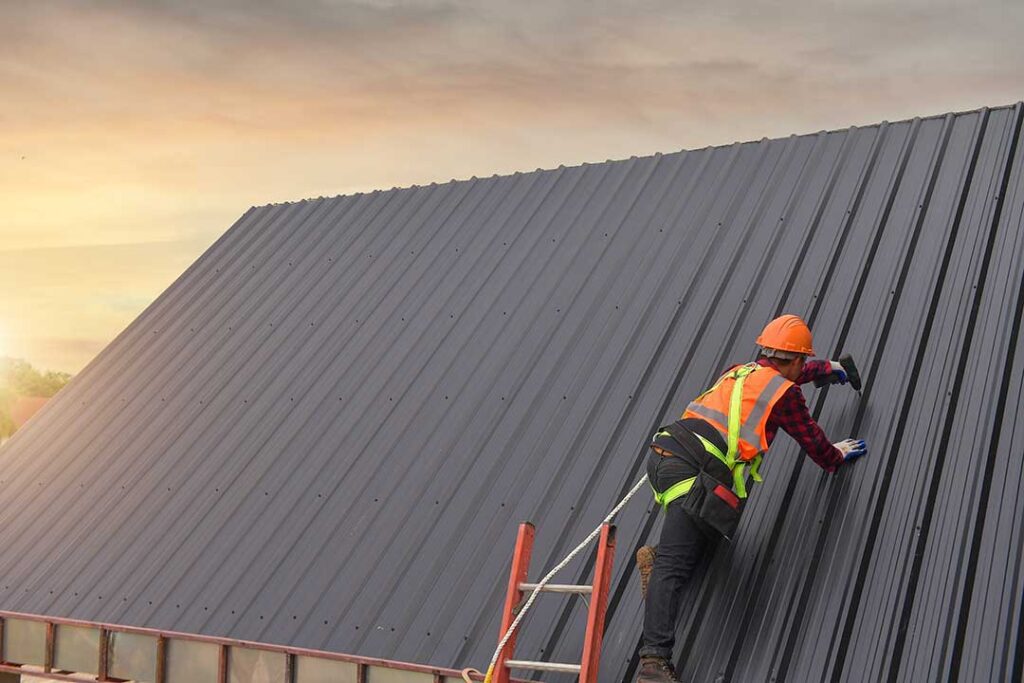
Roof damage can be difficult to document because much of the evidence is exposed to weather, viewed from a distance, or mixed with damage to ceilings, insulation, siding, gutters, and personal property. A careful record made soon after the event can help an insurer understand what happened and distinguish storm-related damage from older wear.
For residents of Amsterdam, NY, this is especially useful after heavy snow, ice, wind, hail, freeze-thaw cycles, or falling branches. The safest approach is to document conditions from the ground first, protect the home from additional damage, and keep an organized record of every step.
What should be done first after roof damage?
The first priorities are safety, temporary protection, and documentation. Do not climb onto a wet, icy, steep, or visibly unstable roof to take photographs.
Before moving damaged materials or beginning cleanup:
- Photograph and video the affected areas from safe locations.
- Record the date and approximate time the damage was discovered.
- Note the weather conditions or event that may have caused the damage.
- Check for interior water entry, electrical hazards, and structural concerns.
- Take reasonable steps to prevent additional damage, such as placing containers under active leaks or covering openings from a secure location.
New York’s Department of Financial Services advises policyholders to photograph or record damage before cleaning up and to keep detailed records of communications and expenses. ([dfs.ny.gov](https://www.dfs.ny.gov/consumers/disaster_flood?utm_source=openai))
If water is near electrical fixtures, the ceiling is sagging, or a large section of the roof has shifted, avoid the affected area until it is safe.
How should roof damage be photographed?
Good insurance photographs show both the overall condition and the specific damage. Take more pictures than seem necessary, but keep them organized.
Begin with wide images that show:
- The entire side of the house where damage appears.
- The roof slope, chimney, vents, skylights, gutters, and nearby trees.
- The relationship between the roof and surrounding structures.
- Any fallen branches, detached materials, or visible debris.
Then take closer photographs of:
- Missing, lifted, cracked, creased, or punctured roofing materials.
- Damaged flashing around chimneys, vents, and roof edges.
- Bent gutters, downspouts, fascia, soffits, or trim.
- Water stains, bubbling paint, damaged drywall, or wet insulation inside.
- Damaged flooring, furniture, clothing, electronics, or other belongings.
Use several angles because a single close-up may not show where the damage is located. Include a familiar object, such as a ruler, tape measure, or unopened household item, only when it can be done safely and helps show scale. Do not alter the damage merely to create a better photograph.
Video can add useful context. A slow walk-through from the exterior and interior can show the extent of the problem, active dripping, loose materials, or the path water took through the home. Speak a brief description into the recording if the date, location, or condition may otherwise be unclear.
What written information belongs in the claim file?
Photos are stronger when paired with a clear written timeline. Create a simple log beginning with the suspected cause and ending with each repair or inspection step.
Record:
- The date and time the storm or event occurred, if known.
- When the damage was first noticed.
- Which rooms, roof sections, and exterior components were affected.
- Whether the problem worsened after additional rain, snow, or wind.
- Emergency steps taken to limit further loss.
- Names, dates, and subjects of conversations with the insurer.
- Dates of inspections, temporary repairs, cleanup, and related purchases.
Write observations rather than conclusions. “Three shingles were found in the yard, and water appeared on the ceiling below the rear roof slope” is more useful than “the entire roof failed.” Avoid guessing about the roof’s age, the exact cause, or whether every damaged item will be covered unless those facts are supported by records or the policy.
New York’s insurance department recommends keeping records of calls, including the representative’s name and the date and time, and following up important conversations in writing. ([dfs.ny.gov](https://www.dfs.ny.gov/consumers/disaster_flood?utm_source=openai))
Should damaged materials be thrown away?
Usually, damaged materials should be preserved until the insurer has had a reasonable opportunity to inspect them, unless they create an immediate safety or sanitation hazard. If disposal is necessary, photograph the materials thoroughly first and keep samples when practical.
For example, loose roofing pieces, broken flashing, fallen branches, wet ceiling material, or damaged personal property may help show what happened. Do not leave hazardous debris in place solely for documentation. Instead, record its original position with photographs and note why it was removed.
Keep invoices and receipts for emergency measures, such as tarps, water extraction, temporary boarding, or replacement items. A receipt does not guarantee reimbursement, but it helps establish what was purchased, when, and why. The National Association of Insurance Commissioners recommends retaining receipts and records for repairs and replacement items. ([content.naic.org](https://content.naic.org/article/what-you-need-know-when-filing-homeowners-claim?utm_source=openai))
How can homeowners prove the condition of the roof before the loss?
Insurance documentation often depends on comparing the condition before and after the event. Helpful records may include:
- Previous inspection reports.
- Roofing or exterior repair invoices.
- Building permits or project records.
- Dated photographs taken before the storm.
- Real estate photographs or home inventory images.
- Receipts for roofing materials or improvements.
- Notes about previous leaks or repairs.

A pre-loss photograph does not need to show every shingle clearly. Even a dated image showing the roof before a storm can help establish that a later opening, missing section, or interior stain was not visible beforehand.
This distinction matters because homeowner policies generally address sudden damage from covered events, while long-term deterioration, neglect, or maintenance issues may be treated differently. The policy language controls, so photographs should document facts without trying to decide coverage in advance.
What about belongings damaged by a roof leak?
Make a separate inventory for personal property. Photograph each damaged item in place before moving it, then record its description, approximate age, purchase date if known, and estimated replacement cost.
Useful supporting records include:
- Original receipts or order confirmations.
- Credit card or bank statements.
- Product manuals and model numbers.
- Serial numbers.
- Warranty documents.
- Older photographs showing the item in the home.
- Repair or replacement estimates, when available.
The New York Department of Financial Services notes that homeowners should be able to show that damaged belongings were owned and were in good condition before the loss. It also recommends keeping receipts, photographs, and inventory records in a secure location. ([dfs.ny.gov](https://www.dfs.ny.gov/consumers/help_for_homeowners/storm_preparedness?utm_source=openai))
Do not assume that damaged contents, roof repairs, and temporary living expenses are handled under the same part of the policy. List each category separately and ask the insurer what documentation applies to each one.
What should be checked in the insurance policy?
Review the declarations page and the sections addressing covered causes of loss, deductibles, roof settlement, personal property, additional living expenses, and duties after a loss.
Pay attention to whether the policy includes:
- A standard deductible or a separate wind-related deductible.
- Replacement-cost or actual-cash-value settlement.
- Special limitations for older roofing materials.
- Requirements for prompt notice.
- Deadlines for submitting forms or proof of loss.
- Coverage for temporary repairs or preventing further damage.
New York policies may contain specific windstorm or hurricane deductible provisions, and the applicable deductible depends on the policy language and circumstances of the loss. ([dfs.ny.gov](https://www.dfs.ny.gov/consumers/help_for_homeowners/insurance/basic_coverage?utm_source=openai))
If the damage may involve flooding, remember that ordinary homeowners insurance and flood insurance are not interchangeable. The cause of the water entry—such as roof opening, overflowing drainage, surface runoff, or groundwater—can affect which policy, if any, applies. The state insurance department advises policyholders with flood insurance to report flood damage to the insurer that issued that coverage. ([dfs.ny.gov](https://www.dfs.ny.gov/consumers/disaster_flood?utm_source=openai))
How should the records be stored?
Keep one complete digital folder and one backup. Use clear filenames such as:
- `2026-09-29_front-slope-wide.jpg`
- `2026-09-29_bedroom-ceiling-leak.mp4`
- `temporary-repair-receipts.pdf`
- `claim-call-log.docx`
Store copies away from the damaged property, such as in secure cloud storage or with a trusted household member. Keep the original photographs when possible, including their metadata. Do not edit images in a way that changes the appearance of the damage.
A well-organized file should allow someone unfamiliar with the home to understand what happened, where it happened, what was done to protect the property, and what remains unresolved.
